Mbote wa kifuanisu kiandi, Ltd
Adresi: Shenyang, Liaoning, China,
Toma zayikusu
Telefoni: 400-964-1314
Luwawanu: 8604053308
Luwawanu mu sadila kisalasala kio
2024-05-16 4334
Comparing Multi-Mode Fiber (MMF) and Single-Mode Fiber (SMF): Selecting the Optimal Fiber Type for Your Application
Multi-Mode Fiber (MMF) and Single-Mode Fiber (SMF) each possess distinct characteristics and applications within the realm of fiber optic communications. This comparison aims to provide a comprehensive overview of the two fiber types, enabling you to make an informed decision on which one best suits your needs.
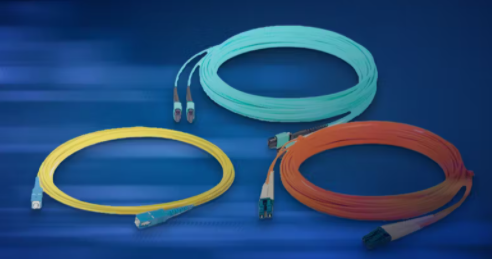
I. Working Principles and Characteristics
Multi-Mode Fiber (MMF):
It has a larger core diameter, typically ranging from 50 to 100 micrometers, allowing for the propagation of multiple modes of light.
Due to its larger core diameter, MMF exhibits higher transmission losses but can achieve high bandwidth over short distances.
Www.adsscable.cn
Ideal for short-distance communication applications such as local area networks (LANs) within data centers, video surveillance systems, and medical equipment.
However, dispersion among different modes of light can lead to signal distortion, limiting the transmission distance.
Single-Mode Fiber (SMF):
It features a smaller core diameter, typically 8 to 10 micrometers, permitting only one mode of light to propagate.Www.adsscable.cn
With its smaller core diameter, SMF exhibits lower transmission losses, enabling high-speed transmission over long distances.
Suitable for long-distance communication applications such as long-haul telecommunications, backbone networks, and metropolitan area networks.
Offers advantages such as high bandwidth, low attenuation, and low dispersion, though it tends to be Luwawanu costly.
II. Application Scenarios
Multi-Mode Fiber (MMF):
Ideal for short-distance, high-bandwidth communication requirements, including connectivity within data centers, office LANs, and video surveillance systems.
Its lower cost makes MMF a popular choice for short-distance communication applications.
Single-Mode Fiber (SMF):
Designed for long-distance, high-speed communication, including long-haul telecommunications, internet backbone networks, and broadcast television transmission.
SMF offers superior transmission speed and lower attenuation over long distances, meeting the demands of remote communication.
III. Selection Recommendations
If you require short-distance, high-bandwidth communication, such as within a data center or an office LAN, MMF may be the optimal choice. Its lower cost and ability to meet most short-distance communication needs make it a practical solution.
For long-distance, high-speed communication, such as long-haul telecommunications or internet backbone networks, SMF is undoubtedly the preferred option. Its superior transmission speed and lower attenuation enable it to satisfy the demands of remote communication.
In conclusion, selecting the optimal fiber type depends on your specific application requirements and scenarios. Both MMF and SMF are excellent Kisalasala kios with their own advantages and disadvantages. Carefully evaluating your needs will help you make an informed decision.